
From your approved design
A file from the design office produced as drawn, after a technical review of the smallest details and their feasibility.
Perforated metal décor is where laser cutting shows at its best: a repeating pattern with hundreds of fine details, identical on every panel, with clean edges that need no finishing to dull them. Mashrabiya, dividers, shading and ceilings — at your project’s dimensions.
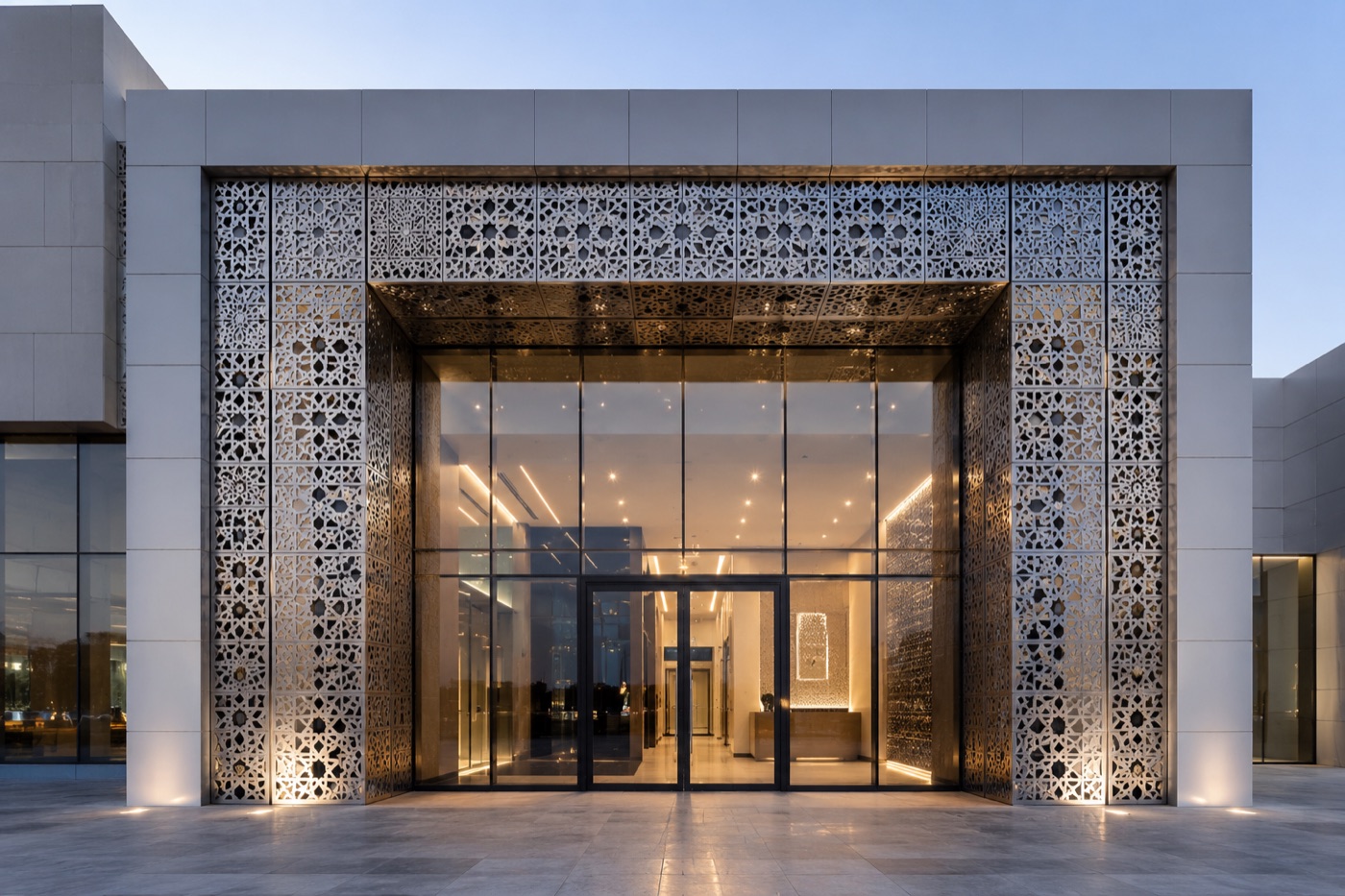
The first problem with perforated mashrabiya and dividers is the open ratio: the more area you remove, the less rigid the panel becomes — until it bows under its own weight or flutters in the wind. A pattern that looks beautiful on screen may be unbuildable as a free-standing panel, needing a frame, division into smaller panels, or a heavier gauge.
The second problem is pattern matching between adjacent panels. When a large screen is split into several panels, the pattern must continue across the joints without a visual break — which requires planning the division before cutting, and knowing where the posts and fixings sit on site.
So we review pattern and dimensions with you before production: checking the smallest detail in the design (can the beam produce it?), the open ratio against the thickness, and the split positions. The result is panels that install directly and read as one piece, rather than panels assembled without a plan.
A file from the design office produced as drawn, after a technical review of the smallest details and their feasibility.
No design yet? We start from a geometric or Islamic pattern and adjust its density and scale to your space.
Splitting a large screen into transportable, installable panels while the pattern continues across the joints.
Fabricating the frame or posts that carry the panels and stop bowing, sized to the installation opening.
Hemming the perforated panel’s edges increases rigidity without extra thickness and hides the sharp edge.
Forming and bendingCoordinating coating or polishing to the environment, since outdoor screens in Jeddah face sun and salty humidity.
Finishing and quality control| Decision | Effect on the result | What we verify |
|---|---|---|
| Open ratio | More open area means a lighter, prettier panel but less rigidity and a risk of bowing. | The balance between pattern and thickness, and whether a frame or split is needed. |
| Smallest detail in the pattern | Very thin details can break or distort thermally during cutting. | The feasibility of every element, suggesting a small change if one is borderline. |
| Single panel size | A large panel looks better but is harder to transport and install, and more prone to flexing. | The site opening size, the transport route, and the available fixing points. |
| Metal | It sets lifespan and appearance: stainless, aluminium, coated steel, or copper for premium work. | The installation environment — an outdoor coastal spot is nothing like an interior divider. |
| Pattern continuity | A break in the pattern at the joints ruins the final look even with precise production. | Planning the split on the complete pattern before cutting, not panel by panel. |
Send the pattern file and the opening size, and we will return clear technical notes before quoting — candidly, if the design needs adjusting.
Façade mashrabiya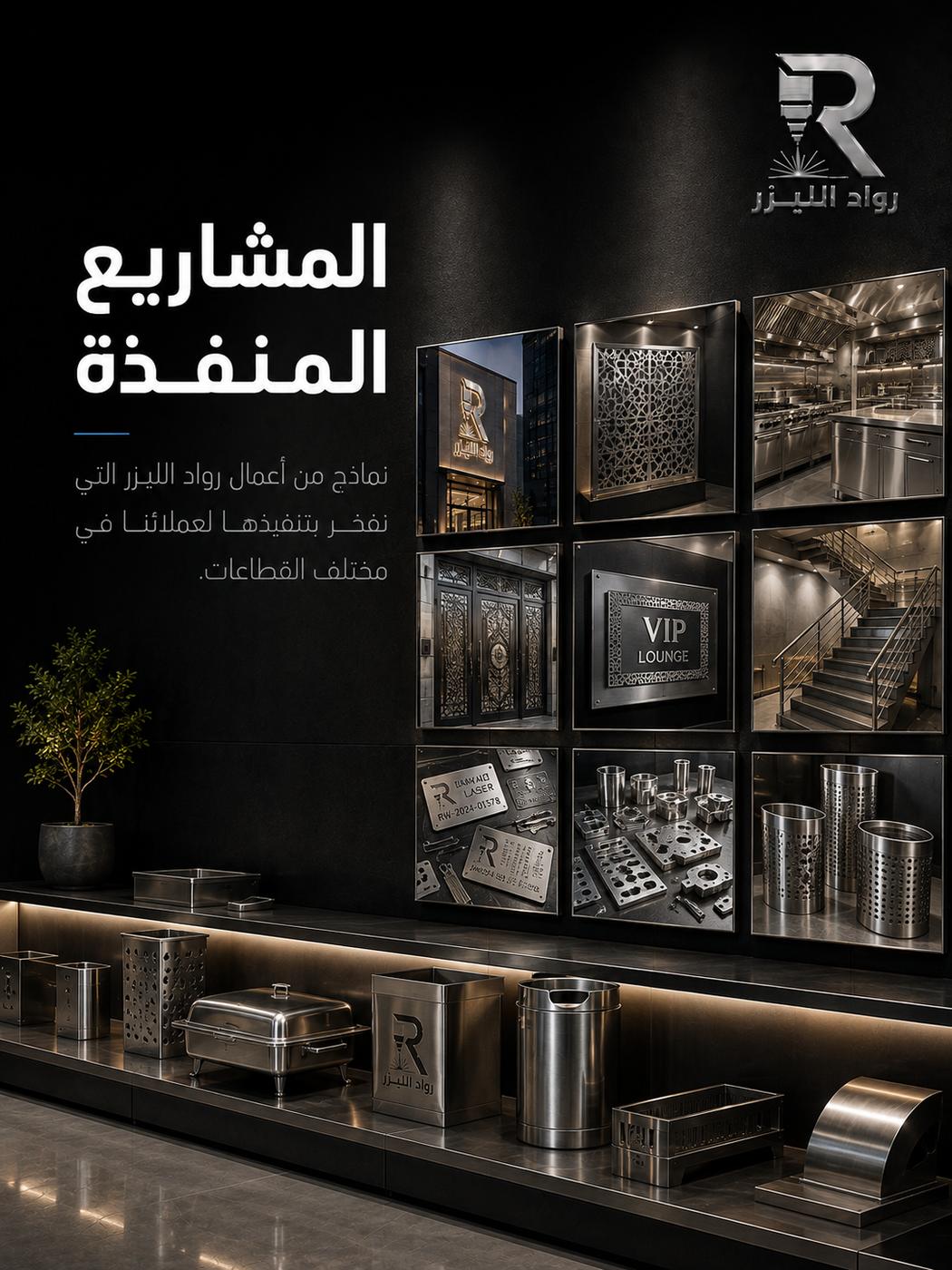 Patterned panels
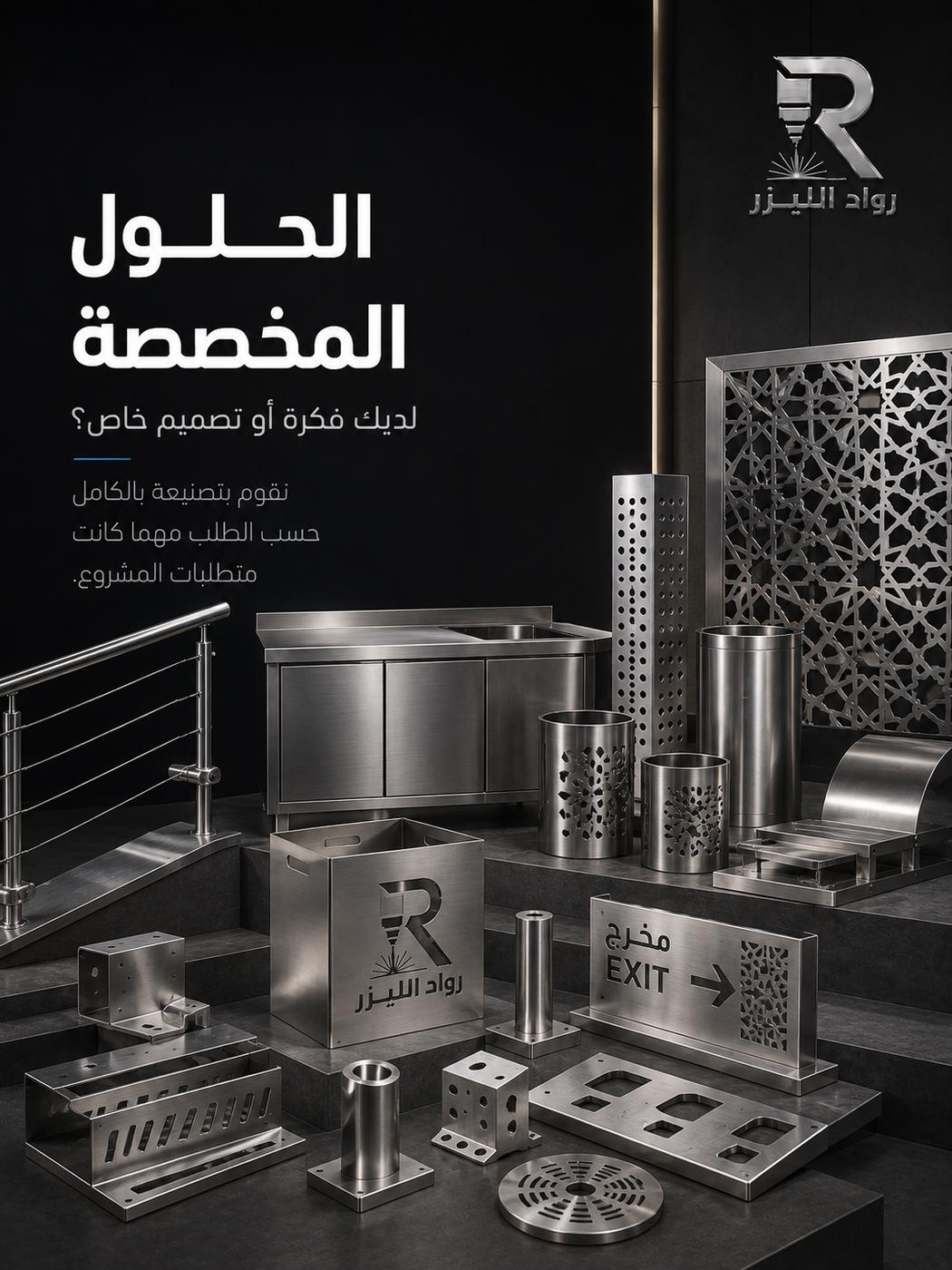 Decorative dividers
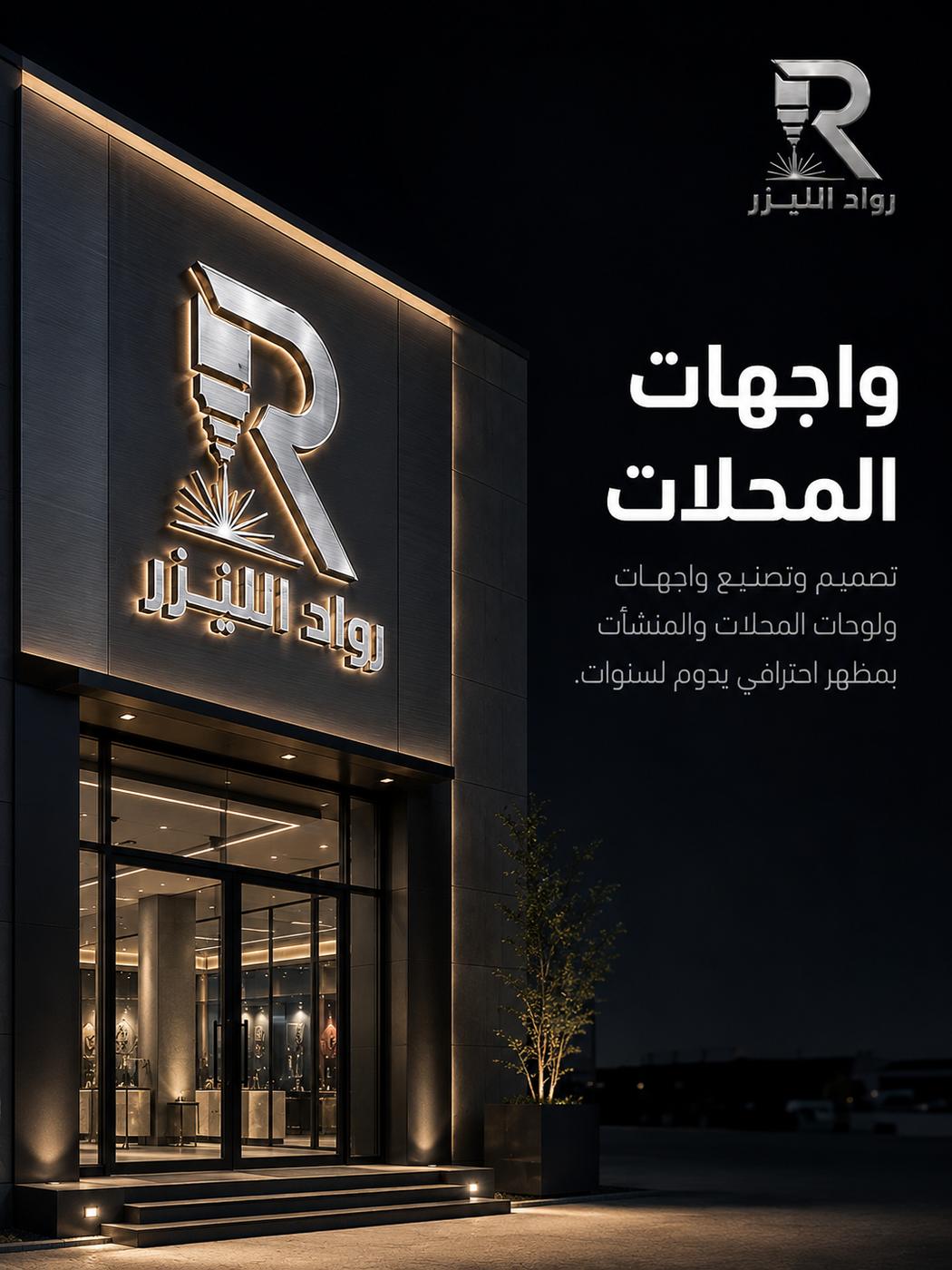 Light and pattern
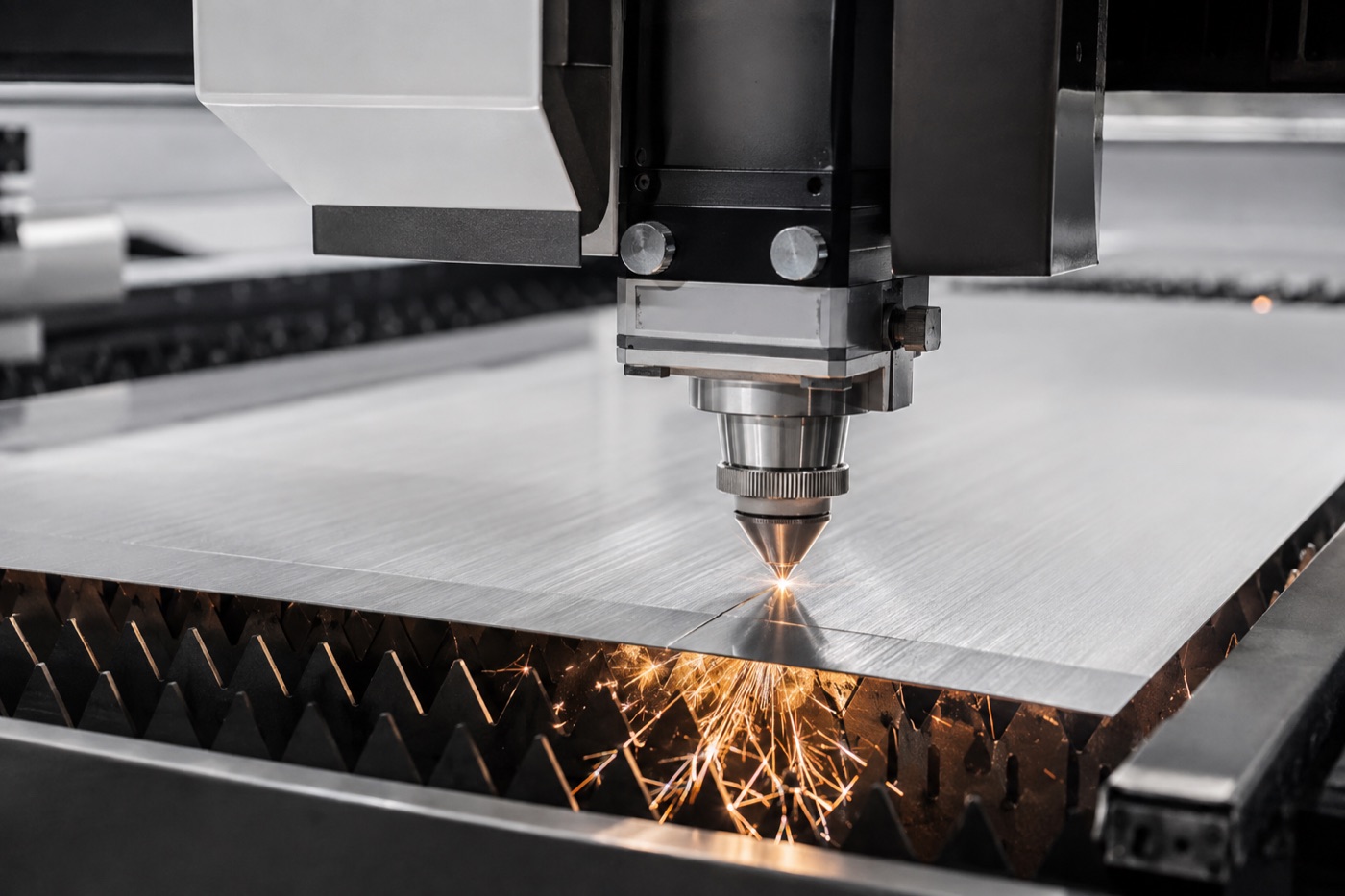 Cutting the pattern
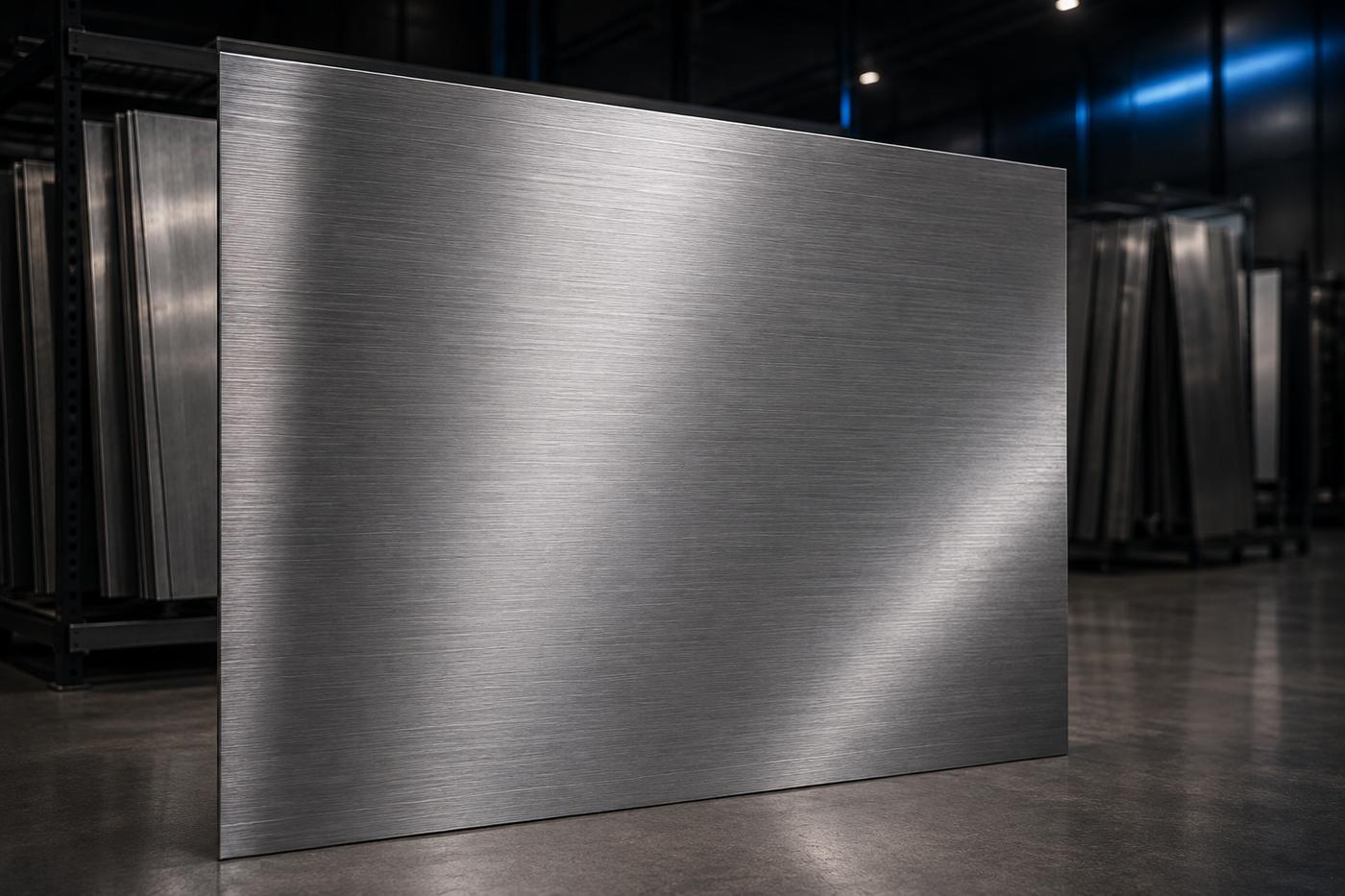 Before cutting
Images are visual samples illustrating the service.
Mashrabiya for windows and balconies that preserve privacy and cut sun without blocking air.
Dividers between seating areas and wall features that create the space’s visual identity.
Entrance cladding, false ceilings and shading elements for building façades.
Executing approved designs to drawing accuracy, with technical notes before production rather than after.
The parent service: cutting the pattern precisely and identically on every panel.
Open the pageCombining pattern with logo and signage into one coherent storefront.
Open the pageFor premium decorative work needing a warm golden tone.
Open the pageMost patterns are producible, but two factors govern it: the smallest detail in the pattern and the open ratio against the thickness. We review your file and tell you if an element needs slight thickening, or if the panel needs a frame for rigidity.
We plan the split on the complete pattern before cutting, placing joints where they do not visually break the repeat, allowing for the post positions on site. We send you the division layout for approval before production.
Aluminium is a strong option: light, so it reduces fixing loads, rust-free, and it takes stable coating colours. 316 stainless lasts longer close to the sea. Coated steel is cheaper but needs periodic coating maintenance in coastal air.
We fabricate the panels and frames and prepare them for installation with fixing holes. On-site installation is coordinated per project, and the quote states what is included.
Yes, and we recommend it on large projects: one panel where you see the pattern, finish and scale in reality before committing to the volume — adjusting one panel is far cheaper than adjusting twenty.
Attach the design file or a reference image with the space dimensions, and we will return technical notes and a clear price.
Send the design and opening size, and we will return the panel layout, the price and the schedule.