
Boxes and closed enclosures
Four or more bends forming a box with precisely meeting edges, ready to weld or bolt together.
Cutting gives you a flat part; bending is what turns it into a product with depth, shape and function. We bend sheet at exact angles and calculate bend allowances before cutting, so the part comes out at the correct final size — not approximately correct.
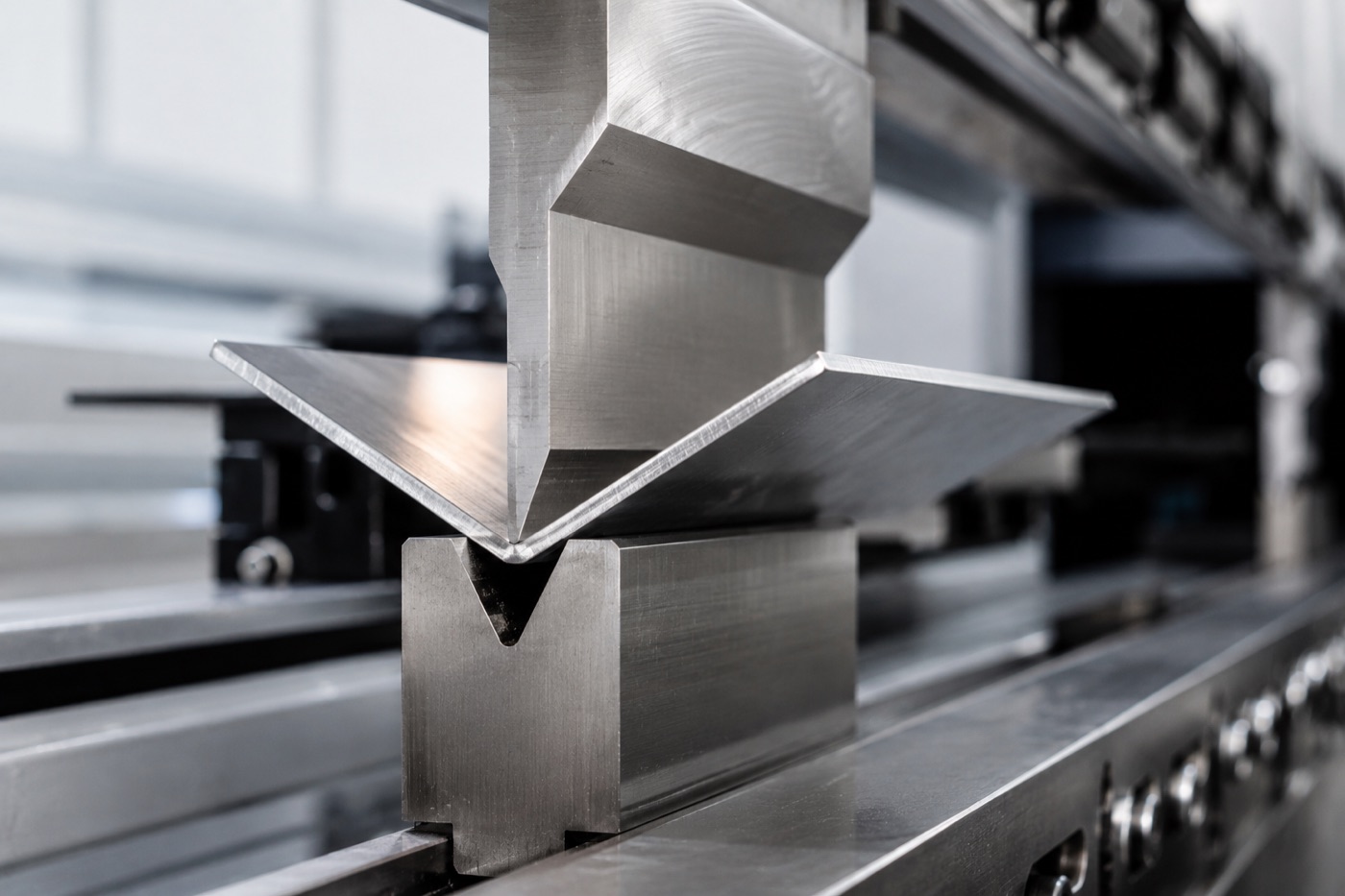
Bending is not just folding a sheet. When a sheet bends, the metal stretches on the outside and compresses on the inside, which means the flat blank length differs from the sum of the finished leg lengths. That difference is the bend allowance, and ignoring it is the number-one reason a part comes out a few millimetres short or long — then gets rejected at installation.
The second reason is the inside bend radius. Every metal and thickness has a minimum radius; go below it and the outer face cracks or shows a clear fracture line. Stainless and aluminium are more sensitive to this than plain steel, and the aluminium alloy itself matters: 5052 tolerates a tighter bend than 6061.
That is why we review your design before cutting, not just before bending: we check bend order and tool access, the grain direction on brushed metal, and the distance between a bend and the nearest hole — because a hole too close to the bend line will deform permanently.
Four or more bends forming a box with precisely meeting edges, ready to weld or bolt together.
L and U profiles and hemmed edges that hide the sharp edge and stiffen the part without adding thickness.
Bases, brackets and column cladding bent to site dimensions that carry load and match the design.
We handle both stages, so one party owns the final dimension — no argument between suppliers.
Laser cutting serviceWe measure a damaged old part’s angles and reproduce a matching copy that drops straight in.
Large batches with identical angles and sizes, because a one-degree variation accumulates and shows in final assembly.
The same design can succeed in one metal and crack in another. This is what we account for before production.
| Metal | Bending behaviour | What we allow for |
|---|---|---|
| Mild steel | The most forgiving: it tolerates relatively tight bends without cracking. | Slight springback after the load is released, compensated by adjusting the angle. |
| Stainless steel | Harder and more resistant, with greater springback than steel. | Higher springback compensation, and protecting the brushed surface from tool marks. |
| Aluminium 5052 | High formability — the best choice for multiple bends and hemmed edges. | A suitable radius to avoid a fracture line on the outer face. |
| Aluminium 6061 | Mechanically stronger but less tolerant of tight bends. | A larger radius, and a design review if the bends are tight. |
| Galvanised sheet | Bendable, though the coating can flake at very tight bends. | A wider radius to keep the zinc coating intact. |
Practical limits for length, thickness and angle vary by order — send the drawing with final dimensions and angles and we confirm feasibility before starting.
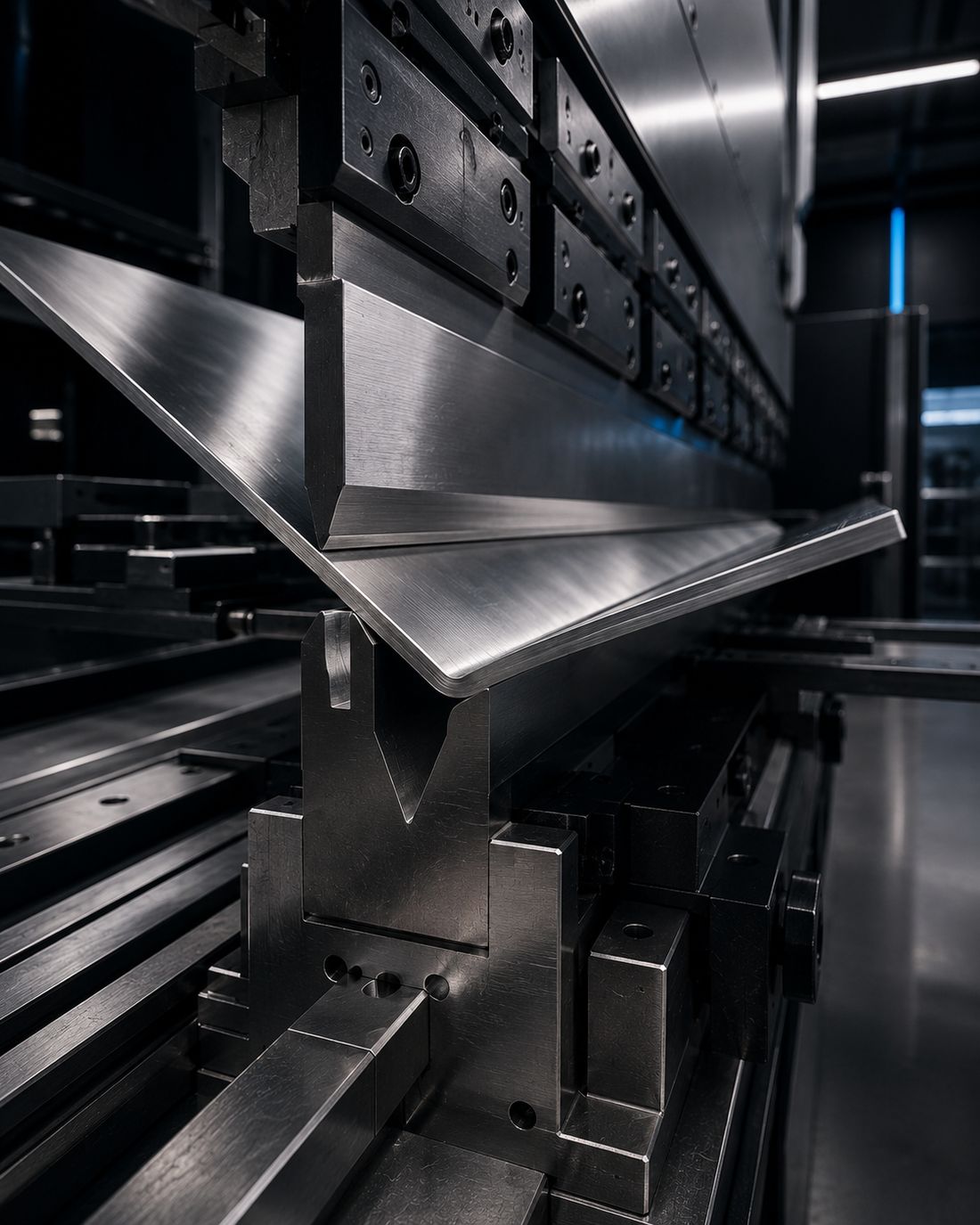 Precise-angle bendMatching angles
 Assembled parts
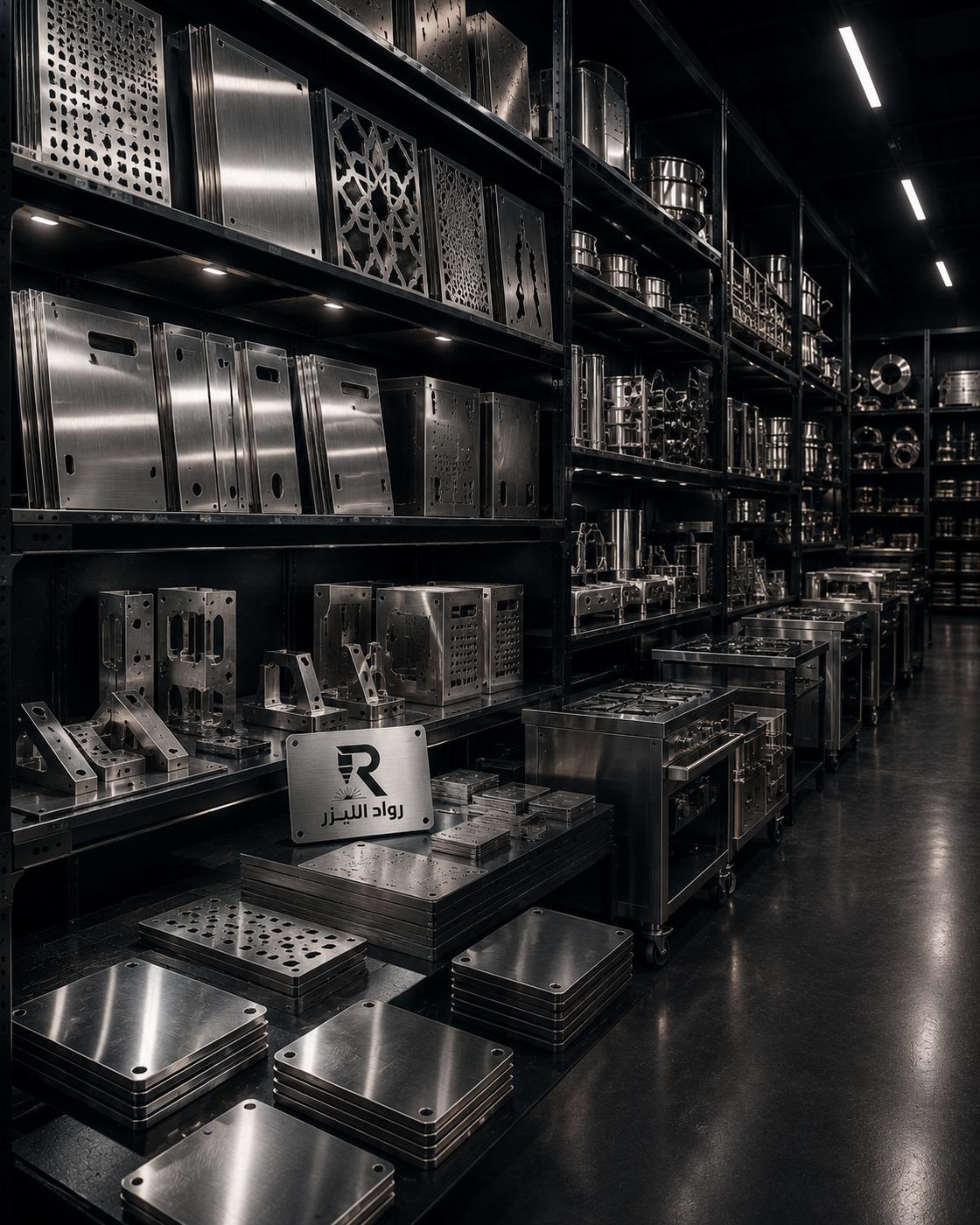 Finished parts
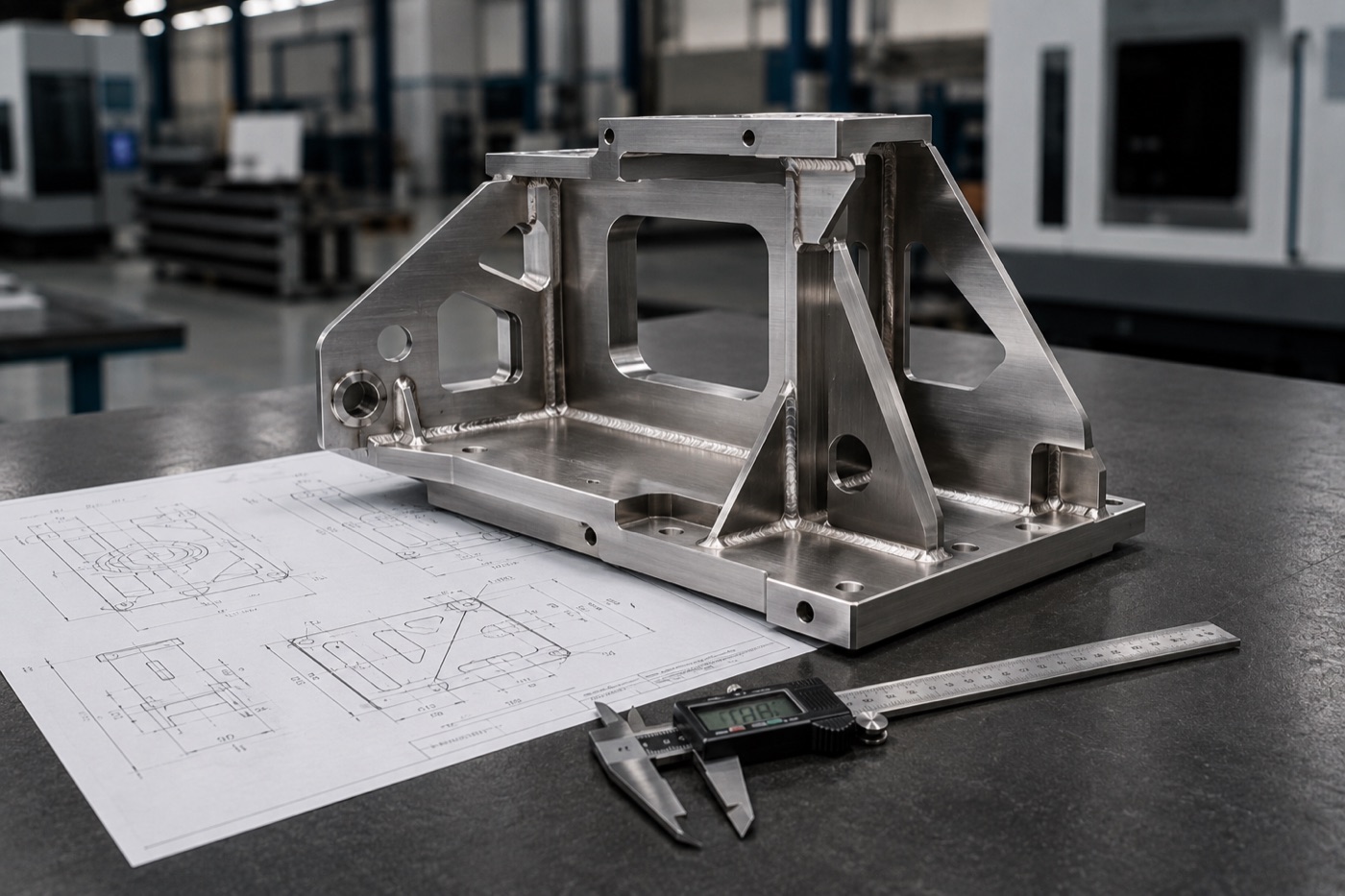 To drawing
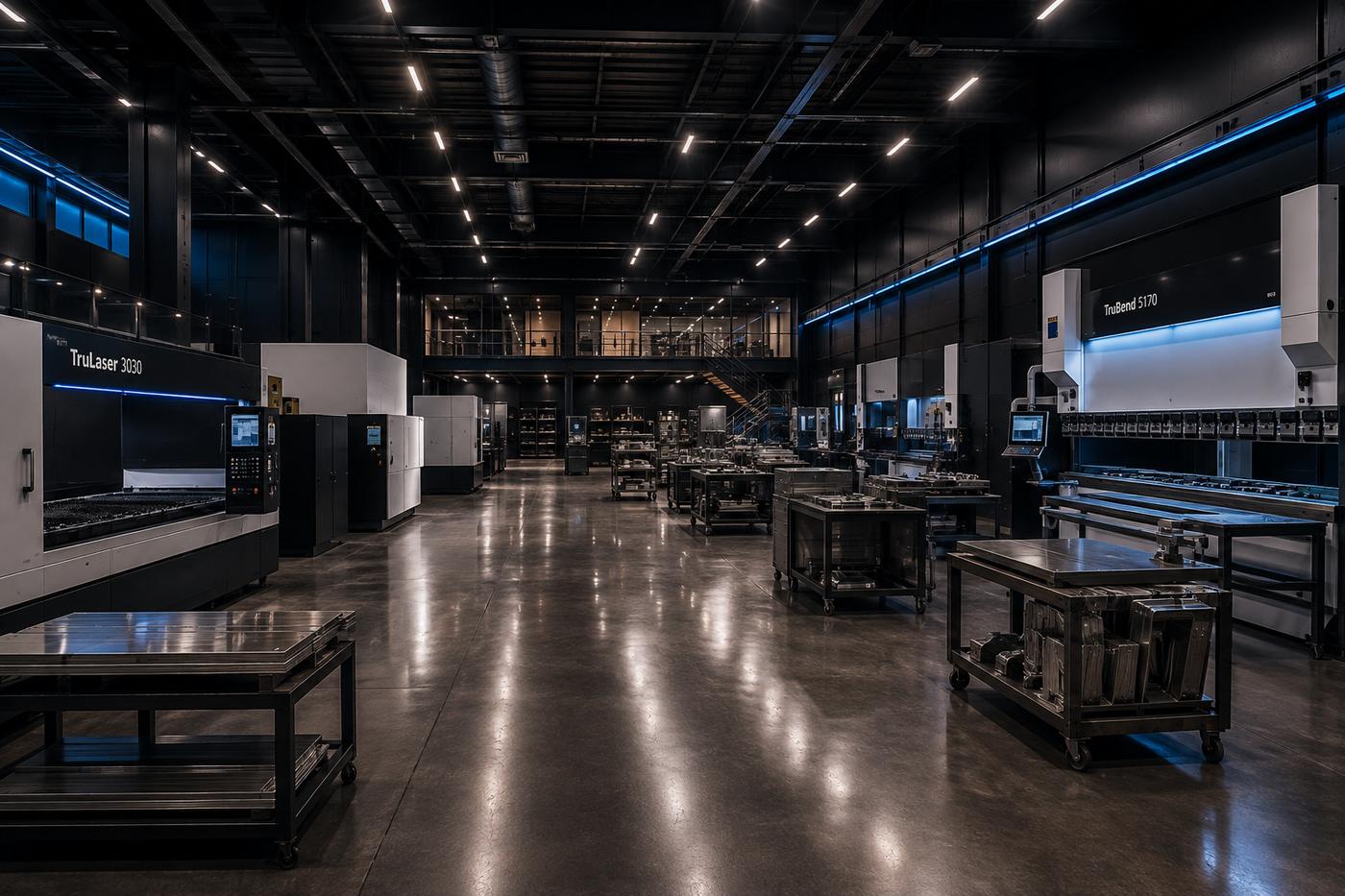 Production floor
Images are visual samples illustrating the service.
Boxes with exact internal dimensions where the component fits with proper clearance, not by force.
Tables, shelves and counter fronts with hemmed edges that are safe to touch and easy to clean.
Cladding panels and trim angles at real site dimensions rather than theoretical ones.
Guards enclosing moving parts, needing precise angles to match an existing frame.
We start from the finished size you actually need, then work back to calculate the flat blank.
We add the bend allowance for each bend and cut the blank to the calculated flat size with hole positions.
We bend in an order that keeps tool access to every bend, and check the angle on the first piece before completing the batch.
We measure angles and lengths on the finished part and deliver it assembly-ready on the agreed date.
We review bends and holes and flag any conflict before the sheet is cut, not after.
On batches we inspect the first piece and confirm angles before forming the rest.
Cutting and bending together with us, so no one passes blame between suppliers.
A trial batch or five hundred pieces — the same care and the same verification method.
The stage before bending, where the flat blank size and hole positions are worked out.
Open the pageCutting, bending, welding and assembly until the part arrives as one finished unit.
Open the pageTreating tool marks, smoothing edges and checking angles before delivery.
Open the pageMost likely the bend allowance was ignored: the blank was cut to the sum of the leg lengths, so the part came out short after bending. We calculate the allowance for each bend before cutting, starting from your finished dimensions rather than the blank.
Marks can be greatly reduced by protecting between tool and surface and keeping the protective film on. Tell us the face is visible and critical, and we handle the part accordingly from the first step.
No problem — most customers do not specify it. We pick a radius appropriate to the metal and thickness to prevent cracking, and tell you the value used if it matters for assembly.
Yes, we coordinate welding and assembly with cutting and bending in one order. Say whether you want the part bent only, or welded and assembled, since that changes price and lead time.
Give the dimensions after bending, the number of bends and their angles, and the metal — we will work out the flat blank.
Send the drawing or a photo of the old part, and we will return a clear price and date.