
Asset tracking and inventory
Every device in the facility carries a unique code linking it to its inventory record — accurate stocktaking with no paperwork.
Asset plates and serial numbersThe sticker carrying the barcode is the first thing to fail in a working environment — and when it goes, the whole traceability chain stops. A code laser-marked into the metal stays readable after years of oil, washing and abrasion.
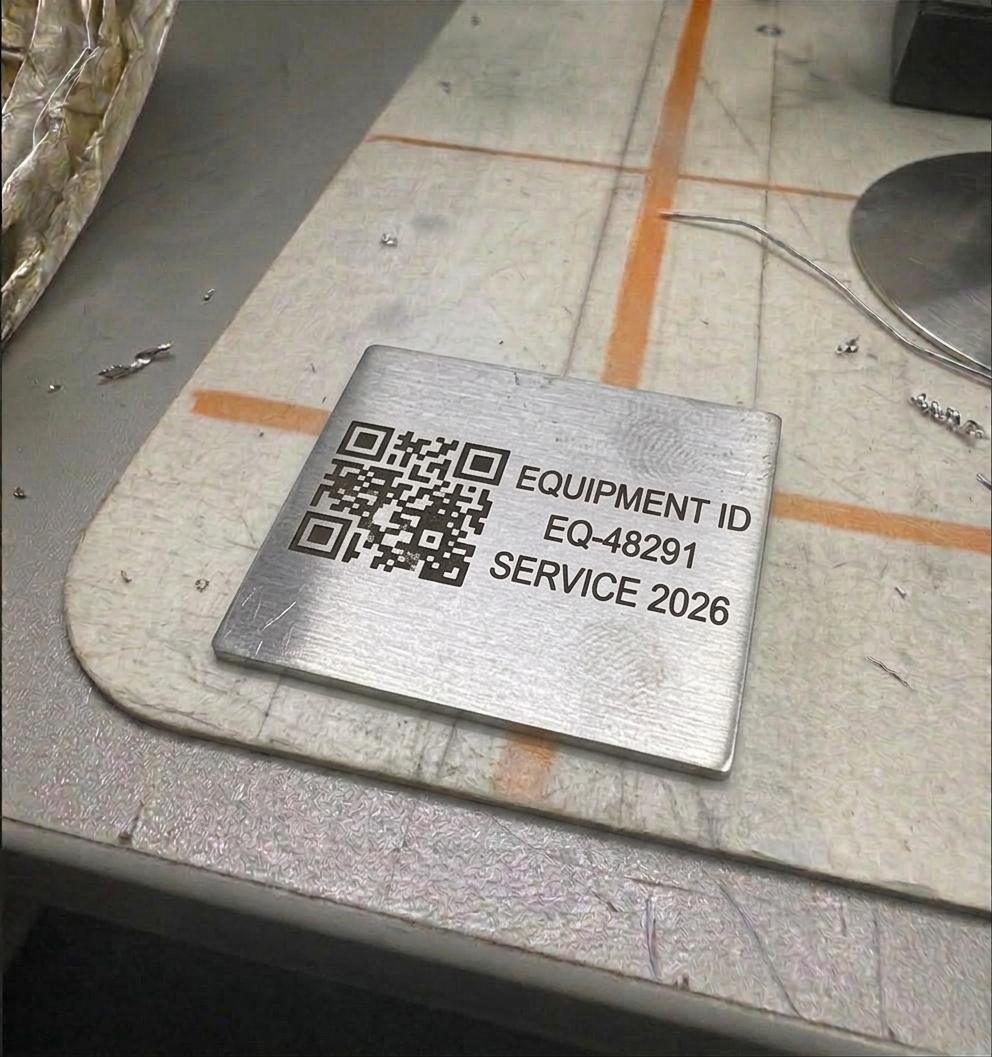
Tracking, inventory and maintenance systems all rest on one assumption: that the code exists and is readable. In reality, an adhesive label in a factory, workshop or construction site meets oils, solvents, heat, pressure washing and abrasion — and falls off or becomes unreadable within months.
A laser-marked code is part of the metal surface. It cannot be peeled, wiped or faded, and stays readable by phone or industrial scanner for the part's whole life. That is the difference between a traceability system that actually works and one that needs re-tagging every year.
Every device in the facility carries a unique code linking it to its inventory record — accurate stocktaking with no paperwork.
Asset plates and serial numbersA technician scans the code with their phone and the service history, manual and spare-part list for that exact asset open up.
Each piece carries its batch code and production date — full traceability for any quality complaint or recall.
A unique code on each genuine piece that is hard to copy and that a customer can verify with their phone.
A code on the product that opens a warranty page, user guide or your social accounts — with no sticker to fall off.
Logo engraving on productsA code recording the last inspection, calibration or safety certificate, opening the digital certificate directly.
The most common mistake is shrinking the code below what its content allows. These are the practical figures we work to.
| Code type | Smallest practical size | Note |
|---|---|---|
| QR with a short link | 8 × 8 mm | Easily phone-readable — the most requested size for equipment plates. |
| QR with a long link | 15 × 15 mm | A long link means smaller modules — we always recommend shortening the URL. |
| Data Matrix | 5 × 5 mm | The best option for small parts, readable even when partly damaged. |
| Linear barcode | 25 × 6 mm | Needs more length — impractical on narrow parts. |
| Code on a curved surface | +30% over the size | Curvature distorts reading, so we enlarge the code and place it in the flattest area. |
We physically test every code with a scanner and a phone before delivery — we never ship a code we have not read ourselves.
QR code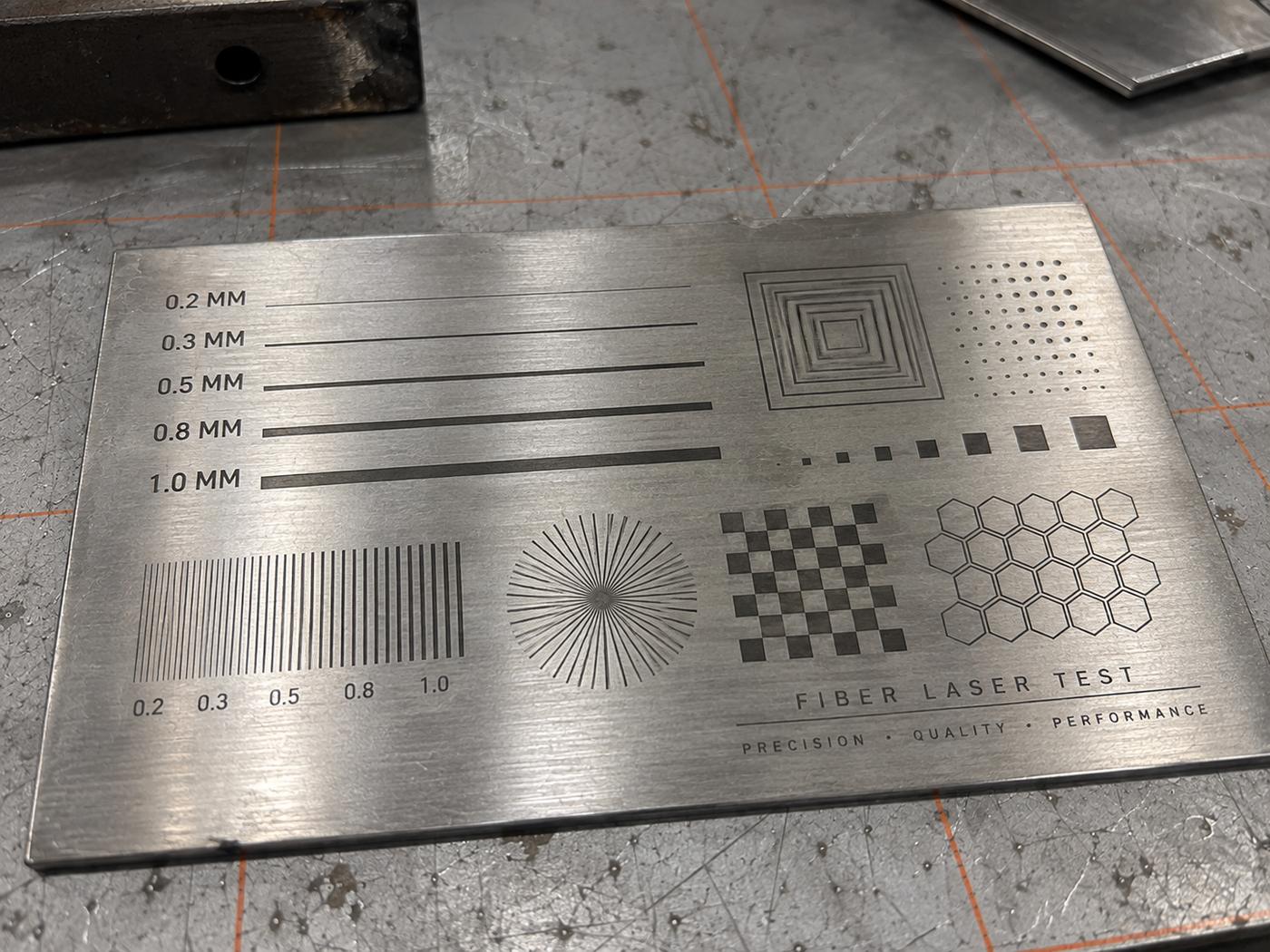 Line detail
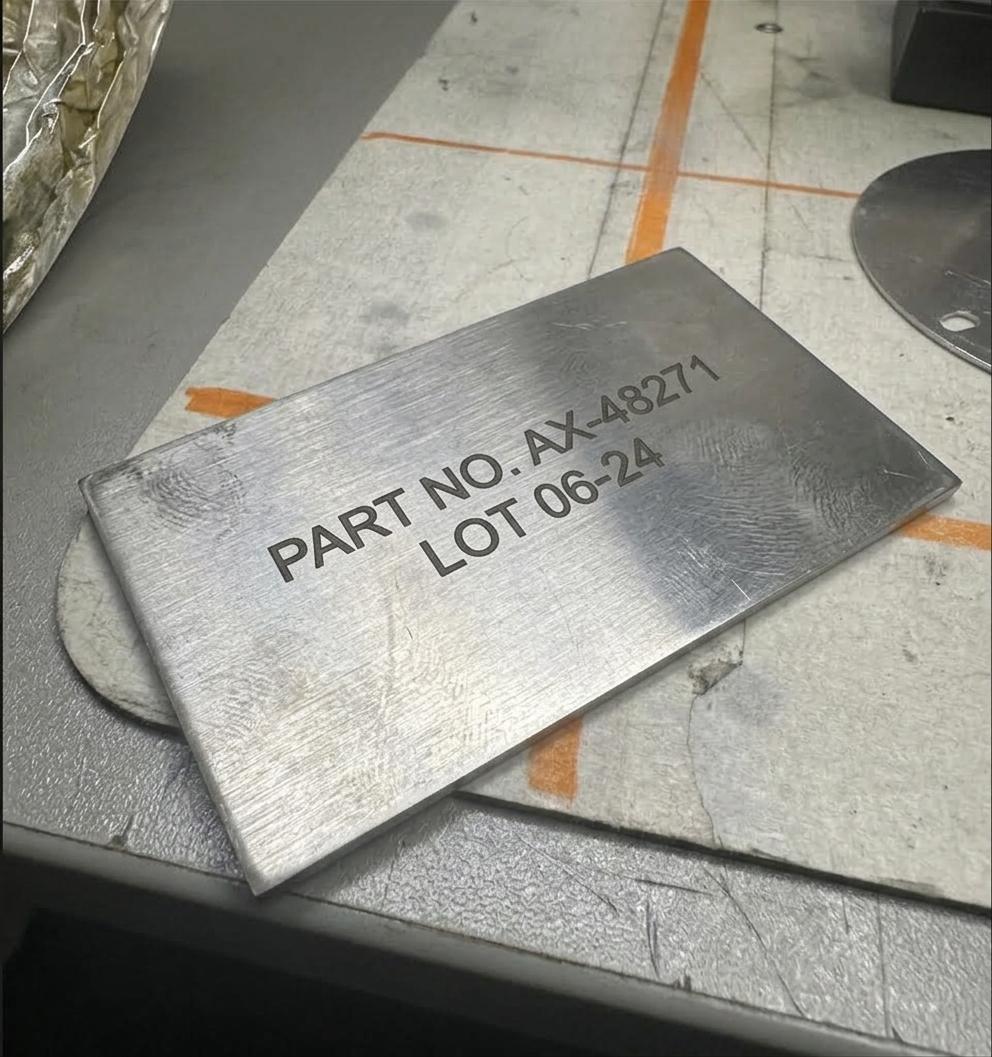 Batch traceability
Images are visual samples illustrating the service.
The code alongside the serial number and asset data on one plate that we cut and engrave.
Open the pageEverything about laser engraving: types, metals and expected results.
Open the pageThe part manufactured, numbered and coded in a single production cycle.
Open the pageYes, if the size and contrast are right. Metal is a reflective surface, so we tune the settings for sufficient contrast between the dark modules and the light surface, and avoid highly polished areas. We test every code with a phone and a scanner before delivery.
Yes. We import the list of codes or links from an Excel file so they advance automatically per piece with no manual step. This is the standard approach for asset numbering and batch traceability, and we run it for batches exceeding a thousand pieces.
This is the most important point before production: the marked code is permanent, so we strongly recommend using a stable short link whose destination you control (a redirectable short link), rather than a direct URL to a page that may change. That way you can change the destination later without re-marking anything.
No. The code is part of the metal surface and is not removed by oils, solvents, pressure washing or heat. The only caution is on parts under direct, continuous mechanical abrasion on the code area itself — in that case we recommend deeper marking or moving the code to a protected position on the part.
The code type, its content or an Excel file of codes, the marking area, and the quantity — and we return a price and a date.
Send the code and part details and get a quote — and every code is tested before it leaves us.